Telegram mini apps fuel toncoin adoption 2026
Telegram has evolved from a messaging platform into a decentralized application store, and this shift is the primary engine driving Toncoin adoption in 2026. Unlike traditional crypto onboarding, which requires downloading separate wallets, navigating seed phrases, and bridging assets across chains, Telegram mini apps operate directly within the chat interface. This frictionless integration lowers the barrier to entry, allowing hundreds of millions of users to interact with blockchain technology without understanding what blockchain is.
The mechanism is simple: developers build lightweight web applications that run inside Telegram. Users authenticate via their existing Telegram accounts, which are linked to a non-custodial wallet. Transactions happen in the background using Toncoin for fees and settlements. This model transforms Toncoin from a speculative asset into a functional utility token. It is the fuel that powers daily interactions, from playing games and managing tasks to making micro-payments for services. The value proposition shifts from "what is the price" to "what can I do with it."
This utility-first approach is reshaping the ecosystem. According to market analysis from the Bitcoin Foundation, the ongoing TON breakout in 2026 is fueled less by hype and more by genuine usage metrics. Bitget’s 2026 guide highlights that deep integration within Telegram apps is a key driver, alongside growing institutional interest. When users engage with mini apps, they are not just holding an asset; they are participating in an economy. This creates a sticky user base that is less likely to sell off during market volatility, providing a more stable foundation for long-term growth.
The result is a self-reinforcing cycle. As more developers build for Telegram, the utility of Toncoin increases. As utility increases, more users join Telegram to access these apps. As users join, the network effect strengthens, making Toncoin more valuable as a medium of exchange. This is not speculation; it is observable behavior. The mini app ecosystem is becoming the primary onboarding mechanism, turning Telegram’s massive user base into a distributed network of Toncoin holders and users.
Web3 gaming and DeFi expand the TON ecosystem
The integration of Telegram Mini Apps has transformed Toncoin from a speculative asset into a functional utility layer for millions of daily users. Unlike traditional blockchains that require complex wallet setups, TON allows users to interact with Web3 applications directly within the messaging interface. This frictionless onboarding has been the primary driver of transaction volume, turning casual social interactions into on-chain activity.
Gaming remains the most visible entry point for this adoption. Projects like Notcoin and Hamster Kombat demonstrated that tap-to-earn mechanics could onboard hundreds of millions of users rapidly. These games serve as a gateway, introducing users to TON wallets and token transfers without requiring prior blockchain knowledge. The sheer scale of daily active users in these mini-apps creates a baseline of network activity that supports further development.
DeFi protocols are increasingly leveraging this user base to build sustainable liquidity. By embedding lending, swapping, and staking interfaces within Telegram, projects reduce the barrier to entry for complex financial operations. This synergy between social connectivity and financial utility distinguishes the TON ecosystem from competitors that rely solely on isolated dApp marketplaces. The result is a network where user engagement translates directly into on-chain value.
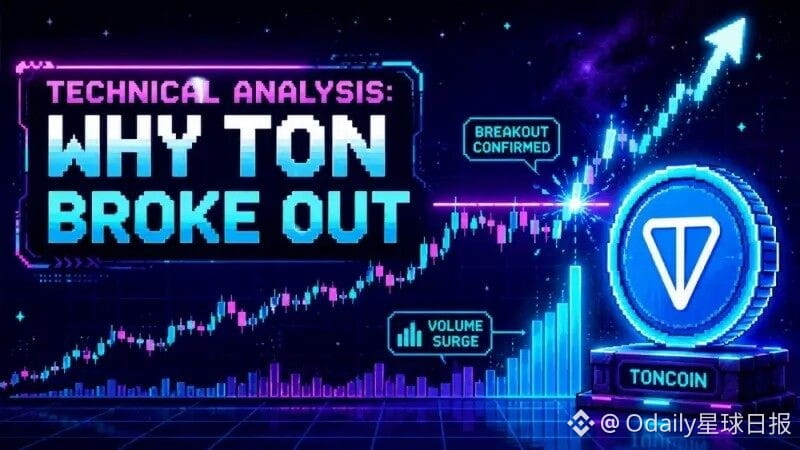
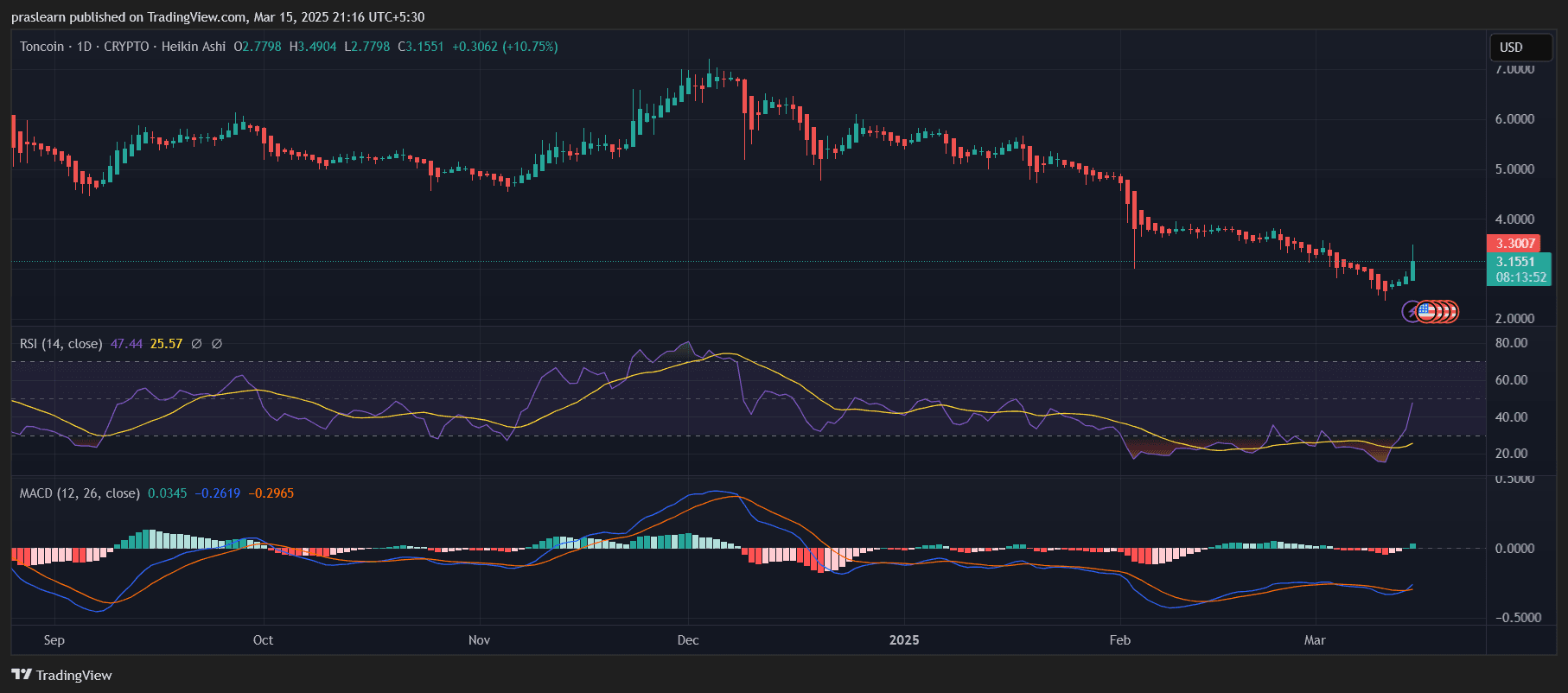
To understand the market context of this growth, it is helpful to view Toncoin's price action alongside its utility metrics. The following charts provide a technical perspective on the asset's performance during this expansion phase.
Toncoin price prediction 2026 market context
Forecasting Toncoin’s value in 2026 requires balancing its explosive utility growth against broader crypto market volatility. While Telegram’s integration of TON Mini Apps has created a unique adoption funnel, price movements remain tethered to liquidity cycles and regulatory clarity. Analysts generally project a wide trading range for the year, reflecting the asset’s high-beta nature.
Most institutional and algorithmic forecasts place the average TON price between $5.00 and $7.48 by mid-to-late 2026. Changelly projects an average of $7.48, with volatility potentially pushing the token as low as $3.61 or as high as $11.35. CryptoRank offers a slightly more conservative baseline, suggesting an average near $5.00 with a ceiling around $10.00, contingent on sustained user metrics from the Telegram ecosystem. These ranges acknowledge that while utility is growing, price discovery is still maturing.
Current market sentiment in early 2026 suggests a recovery phase. Trading near $1.20 in March, TON has faced significant downward pressure from earlier highs. However, base-case scenarios for year-end 2026 often target the $2.40–$3.50 range, with bullish cases extending to $5.50–$7.00 if Mini App engagement converts to consistent on-chain transaction volume.
These predictions are not guarantees but rather reflections of current growth trajectories. The primary driver for any upside remains the conversion rate of Telegram’s 900 million monthly active users into active TON wallet holders. If Mini Apps transition from novelty to daily utility, the upper bounds of these forecasts become more plausible. Conversely, a slowdown in new user acquisition or a broader crypto bear market could keep prices anchored near the lower end of these estimates.
Checklist for Evaluating Ton Ecosystem Growth
Assessing the health of the Ton ecosystem requires looking beyond price action. With the official rebrand to Gram (GRAM) in mid-2026, the focus has shifted toward tangible utility within the Telegram Mini Apps environment. This framework helps you track whether growth is driven by active users or speculative noise.
Active user metrics are the strongest indicator of adoption. Look for consistent DAU growth in Telegram Mini Apps rather than sporadic spikes. Official ecosystem reports should show steady engagement across multiple apps, not just one viral hit. Sustained user retention signals real utility over temporary hype.
High transaction counts confirm that the network is being used for more than just holding assets. Check for consistent daily transaction volumes on the TON blockchain. A healthy ecosystem shows regular activity from decentralized exchanges, NFT marketplaces, and payment gateways within the Telegram interface.
A robust ecosystem supports diverse applications. Look for a growing number of unique Mini Apps launching monthly. Developer activity should be visible through regular updates, new features, and integration of TON Connect for seamless wallet interactions. Diversity reduces reliance on any single project for network health.
Utility increases when users can easily enter and exit the ecosystem. Monitor the volume of stablecoins like USDT on TON and the availability of local payment methods. High stablecoin circulation indicates that users are treating the network as a practical tool for daily transactions, not just a speculative asset.
With the recent rebrand, community governance plays a larger role. Check for active voting on proposals and treasury spending. High participation rates suggest that holders are engaged in the long-term direction of the network. Low engagement may indicate apathy or lack of clear value propositions.
Use this checklist to separate genuine ecosystem growth from market speculation. Focus on these fundamentals to understand the true trajectory of the Gram network in 2026.
No comments yet. Be the first to share your thoughts!