Telegram mini apps unlock mass onboarding
Toncoin’s growth in 2026 is not driven by speculative trading alone, but by deep integration into Telegram’s 900 million monthly active users. Mini apps serve as the primary onboarding layer, allowing users to interact with blockchain utilities without ever leaving the messaging interface. This frictionless entry point transforms casual social interactions into active crypto participation.
The mechanism is straightforward: developers embed lightweight web applications directly within Telegram chats. Users can send TON for payments, stake assets, or play games with a single tap. For the average user, this removes the technical barriers of wallet creation and private key management. The result is a user base that engages with Toncoin as a utility rather than a distant asset.
This integration creates a network effect that traditional blockchains struggle to replicate. As more mini apps launch, the utility of TON increases, attracting more users who then demand more applications. This cycle drives real usage metrics that correlate with long-term value retention. The ecosystem is no longer just a ledger; it is a functional layer within one of the world’s largest social platforms.
USDT transactions dominate daily activity
Toncoin has evolved from a speculative asset into a functional settlement layer, largely driven by the integration of Tether (USDT) on the TON blockchain. This shift marks a critical transition: the network is no longer just hosting games or memes; it is processing real-world payments. The volume of USDT transfers on TON has surged, reflecting a growing demand for stablecoin utility within Telegram’s ecosystem.
This dominance is not accidental. Telegram’s massive user base provides a ready-made distribution channel for payments, but it is the low fees and high speed of TON that make USDT a viable alternative to traditional banking rails for micro-transactions. Users can send money globally in seconds with negligible costs, a feature that resonates with both individual users and small businesses operating within the Telegram app.
The result is a tangible increase in on-chain activity that goes beyond trading volume. Daily active addresses are increasingly engaged in payment-related transactions rather than speculative swaps. This utility-driven demand provides a more stable foundation for the network’s growth compared to price-only rallies.
Note: The chart above reflects the broader Toncoin market context. The specific USDT on-chain volume is a leading indicator of this utility shift.
While USDT leads the charge, other stablecoins and native TON assets are also seeing increased usage. However, the sheer scale of Tether’s adoption on this chain sets the standard for what blockchain-based payments can look like when integrated directly into a social platform. The focus is shifting from "if" people will use crypto for payments to "how" they will do it, and Telegram Mini Apps are currently answering that question.
Web3 gaming and social tokens gain traction
Beyond payments, the TON ecosystem is seeing a surge in interactive applications, particularly in Web3 gaming and social tokens. These verticals leverage Telegram’s massive user base to onboard non-crypto natives through familiar interfaces. Instead of navigating complex wallets, users interact with mini-apps that feel like standard mobile games or social feeds.
Gaming projects on TON are moving beyond speculative assets to focus on actual gameplay and utility. Titles like Notcoin and Hamster Kombat demonstrated the potential for mass adoption by integrating directly into Telegram’s chat environment. This frictionless entry point allows millions of users to earn tokens and engage with blockchain mechanics without understanding private keys or gas fees.
Social tokens further deepen engagement by allowing creators and communities to monetize their influence directly. Holders gain access to exclusive content, voting rights, or real-world perks, creating a sticky economic loop. This model aligns incentives between creators and fans, turning passive followers into active stakeholders in the ecosystem.
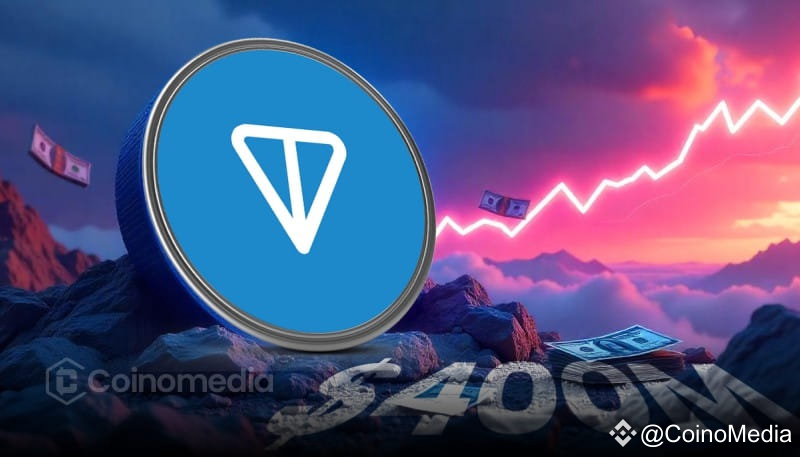
The momentum is supported by strategic funding and infrastructure upgrades. The TON Foundation recently raised $400 million to expand development efforts, focusing on scalability and developer tools. This capital injection signals long-term commitment to sustaining growth in these high-engagement sectors.
TON price action and market trends
The rise of gaming and social tokens has contributed to increased demand for TON, reflected in its recent market performance. Traders are closely watching the token’s price action as it navigates volatility amid broader crypto market trends.
Regulatory clarity supports institutional interest
Regulatory frameworks are shifting from ambiguity to defined utility, creating a safer environment for capital deployment. When governments classify digital assets with specific legal statuses, it reduces compliance risk for traditional financial institutions. This clarity is a primary driver for institutional adoption, as it allows banks and asset managers to integrate cryptocurrencies into existing fiduciary structures without fearing sudden legal reversals.
A significant milestone in this trend is Russia’s classification of TON as a "liquid cryptocurrency" for retail investment in January 2026 src-serp-7. This designation places Toncoin alongside established assets like Bitcoin and Ethereum, signaling that major economies are beginning to recognize its store-of-value properties. Such moves provide a foundational layer of confidence for both retail users and larger entities considering exposure to the asset.
The combination of Telegram’s massive user base and clearer regulatory pathways creates a unique value proposition. Institutions are increasingly interested in assets that offer both liquidity and widespread distribution networks. As more jurisdictions define their stances on cryptocurrencies like TON, the barrier to entry for traditional finance lowers, potentially accelerating the flow of capital into the ecosystem.
2026 price outlook and ecosystem growth metrics
Market forecasts for Toncoin in 2026 vary widely, reflecting the asset's sensitivity to both broader crypto trends and Telegram's specific adoption curves. Analysts generally project a trading range between $1.00 and $10.00, with an average price near $5.00 if current growth trajectories hold. Some models suggest a potential peak around $5.15 by mid-2026, while others remain more conservative, citing the volatility inherent in high-stakes market analysis.
To evaluate TON's long-term viability, it is essential to compare its adoption drivers against other Layer 1 blockchains. The following table contrasts key metrics, highlighting where Toncoin's unique integration with Telegram provides a distinct advantage in user acquisition and transaction volume.
No comments yet. Be the first to share your thoughts!