Toncoin adoption in 2026: the reality behind the hype
The surge in Toncoin (TON) adoption throughout 2026 is not driven by speculative trading alone, but by the tangible utility of Telegram’s mini-app ecosystem. As one of the largest messaging platforms globally, Telegram has integrated TON directly into its wallet infrastructure, allowing millions of users to send, receive, and spend crypto without leaving the app. This seamless integration has lowered the barrier to entry, turning abstract blockchain technology into a daily payment method for digital goods, services, and peer-to-peer transfers.
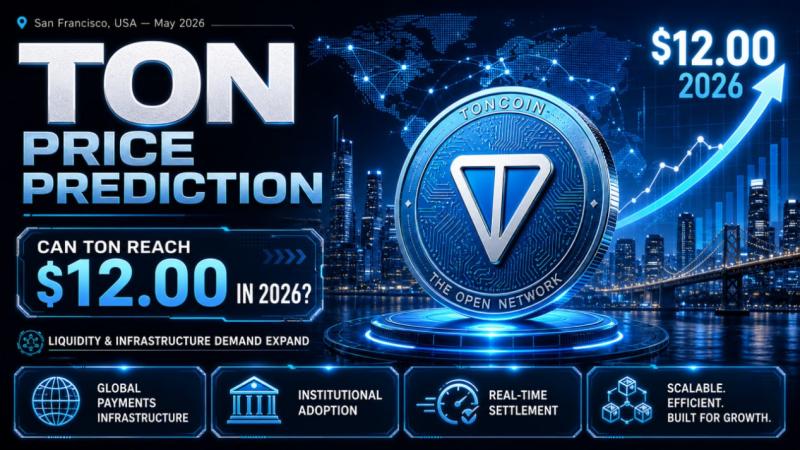
Market analysis from early 2026 suggests that this utility is translating into sustained price stability. Experts project that TON’s value will remain above $10.43 through the latter half of the year, with potential peaks reaching $12.25. This resilience is largely attributed to the increased transaction volume generated by mini-app developers who are building financial tools, games, and marketplaces directly on the TON blockchain. The network’s high throughput and low fees make it a practical choice for micro-transactions that would be cost-prohibitive on older blockchains.
Looking ahead, the trajectory for 2027 remains a focal point for investors and developers alike. Predictions vary, with some models suggesting a modest annual growth rate of 5%, which would place the price around $1.46 if current baselines are adjusted for inflation and market cycles. However, more optimistic forecasts based on continued user acquisition and mini-app innovation suggest significantly higher valuations. The key metric to watch is not just the price, but the number of active daily users engaging with TON-powered applications within Telegram.
Toncoin adoption 2026 choices that change the plan
As Telegram’s mini-app ecosystem matures, the value proposition of Toncoin (now rebranded as Gram, ticker: GRAM) shifts from speculative growth to utility-driven liquidity. Adopting TON in 2026 means navigating a unique convergence of social media scale and blockchain infrastructure. Before integrating TON into payments or holding strategies, evaluate the concrete tradeoffs between accessibility, volatility, and regulatory clarity.
The primary advantage is distribution. Telegram’s 900 million monthly active users provide a frictionless onboarding layer that isolated DeFi protocols cannot match. Mini-apps allow instant wallet creation and transaction signing without leaving the chat interface. This reduces the cognitive load for non-crypto natives, turning TON into a potential medium of exchange for digital goods, subscriptions, and peer-to-peer transfers within the app.
However, this convenience comes with centralization concerns. Unlike decentralized networks where governance is distributed, TON’s development and node validation are heavily influenced by the Telegram Foundation and a small set of large validators. Users trading off speed and ease of use for network sovereignty must consider whether this tradeoff aligns with their risk tolerance. Additionally, the recent rebrand from Toncoin to Gram may introduce short-term confusion in trading pairs and liquidity pools across exchanges.
| Factor | Advantage | Tradeoff |
|---|---|---|
| User Acquisition | Instant access via Telegram’s 900M+ users | Limited to Telegram ecosystem; harder to export to other chains |
| Transaction Speed | Near-instant finality in mini-apps | Higher centralization of node validation |
| Liquidity | Deepening pools as mini-app volume grows | Volatility tied to broader crypto market cycles |
| Regulatory Clarity | Integrated with Telegram’s legal entities | Potential scrutiny on cross-border payment flows |
For investors and developers, the decision hinges on whether you prioritize reach over decentralization. The following widgets provide real-time data to assess current market conditions and technical trends.
How to evaluate Toncoin mini-apps for payments
The Telegram ecosystem has shifted from speculative trading to actual utility. Mini-apps like Wallet, Fragment, and Jetton are no longer just interfaces; they are payment rails. To determine which tools fit your needs, evaluate them against three practical criteria: transaction speed, user friction, and native integration depth.
Toncoin settles blocks in seconds, not minutes. When testing a mini-app, send a small test transaction. If it takes longer than 5-10 seconds to confirm on-chain, the app may be relying on slower off-chain ledgers or third-party aggregators. For daily payments, on-chain finality is non-negotiable.
A payment tool fails if it requires leaving Telegram. Evaluate whether the mini-app allows seamless switching between chat, wallet, and payment confirmation within a single view. If users must copy-paste addresses or switch apps to approve a transaction, the friction is too high for mainstream adoption.

Avoid wrappers that convert TON to USDT or other stablecoins for every transaction. Native integration means the app handles TON directly, minimizing fees and exposure to bridge risks. Check if the app supports Jettons (TON-based tokens) natively, as this is where most merchant payments are moving in 2026.
Spotting Misleading Toncoin Claims
Telegram’s mini-app ecosystem has turned Toncoin into a household name, but that visibility invites hype. When you see claims about inevitable adoption or guaranteed returns, look for the actual mechanics behind the numbers. Real growth comes from utility, not speculation.
Many articles cite price predictions as proof of success. A common mistake is treating a $12.25 peak in September 2026 as a certainty rather than one scenario among many. Similarly, a 2027 prediction of $1.46 based on a flat 5% annual growth rate ignores the volatility inherent in crypto assets. These numbers are useful for planning, not for guaranteeing outcomes.
Another trap is confusing user count with active usage. Telegram has billions of users, but only a fraction engage with crypto mini-apps daily. If a source highlights total registrations without mentioning active wallets or transaction volume, the claim is likely inflated. Focus on projects that show consistent daily engagement and clear utility, such as seamless payments or gaming rewards, rather than those relying on vague "mass adoption" narratives.
Finally, be wary of sources that don’t disclose their data methods. If a prediction doesn’t explain its model or assumptions, treat it with skepticism. Stick to official announcements from The Open Network and reputable financial platforms that provide transparent, dated market data.
Toncoin adoption 2026: what to check next
The shift from TON to Gram introduces real-world friction. Exchanges and wallets must update their listings, and users need to verify that their mini-apps still recognize the new ticker. Until the migration is complete across major platforms, transaction delays are likely.
Price forecasts for 2027 remain speculative. One model from Kraken suggests a modest 5% annual growth, projecting a price of $1.46 by 2027. More optimistic analysts from Changelly and AEXchanger argue that Telegram’s user base will drive the token toward $10–$12 in 2026, with 2027 values potentially exceeding $15 if adoption accelerates.
The rebrand to Gram is official as of August 6, 2026, according to CoinMarketCap. This change does not alter the underlying blockchain technology or the utility of mini-apps. However, it requires users to update their portfolio trackers and exchange accounts to avoid confusion during trading.
No comments yet. Be the first to share your thoughts!